🐙 How to Cook Octopus Perfectly (Tender, Juicy & Never Chewy)
Cooking octopus at home might seem intimidating, but with the right technique, you can achieve perfectly tender, flavorful results every time. Many home cooks struggle with rubbery octopus, but the secret lies in proper preparation, gentle cooking, and correct timing.
In this guide, you’ll learn exactly how to cook octopus perfectly, whether you want to boil, grill, or pan-sear it for a restaurant-quality seafood dish.
🐙 Why Octopus Becomes Tough
Octopus is naturally rich in connective tissue and muscle fibers, which can turn tough if cooked incorrectly. The key to tender octopus is:
- Breaking down the fibers slowly
- Cooking at the right temperature
- Avoiding overcooking
When done right, octopus becomes buttery soft inside with a slightly crispy exterior.
🛒 Ingredients
- 1 whole octopus (fresh or frozen, about 1–1.5 kg)
- 2–3 bay leaves
- 1 onion (optional)
- 3 cloves garlic
- 1 tablespoon black peppercorns
- Salt (to taste)
- Olive oil
- Lemon (for serving)
👨🍳 Step-by-Step: How to Cook Octopus Perfectly
1️⃣ Clean and Prepare the Octopus
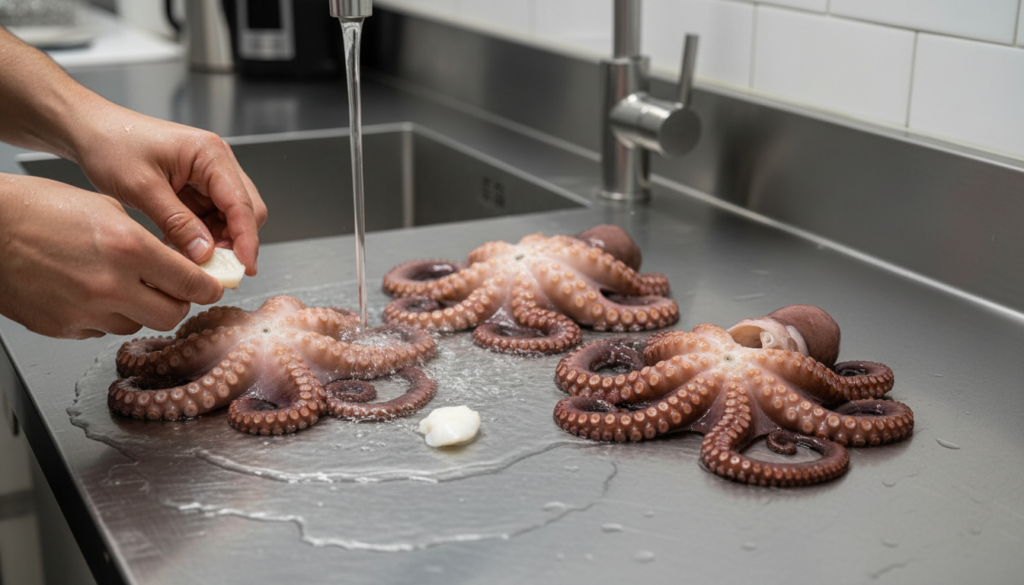
If your octopus isn’t pre-cleaned:
- Remove the beak (center of the tentacles)
- Remove internal organs
- Rinse thoroughly under cold water
👉 Tip: Frozen octopus is actually more tender because freezing helps break down muscle fibers.
2️⃣ Tenderize the Octopus (Important Step)
You can tenderize octopus in several ways:
- Freeze it overnight (best method)
- Gently massage or pound the tentacles
- Slow cooking (most reliable method)
This step helps prevent the rubbery texture many people fear.
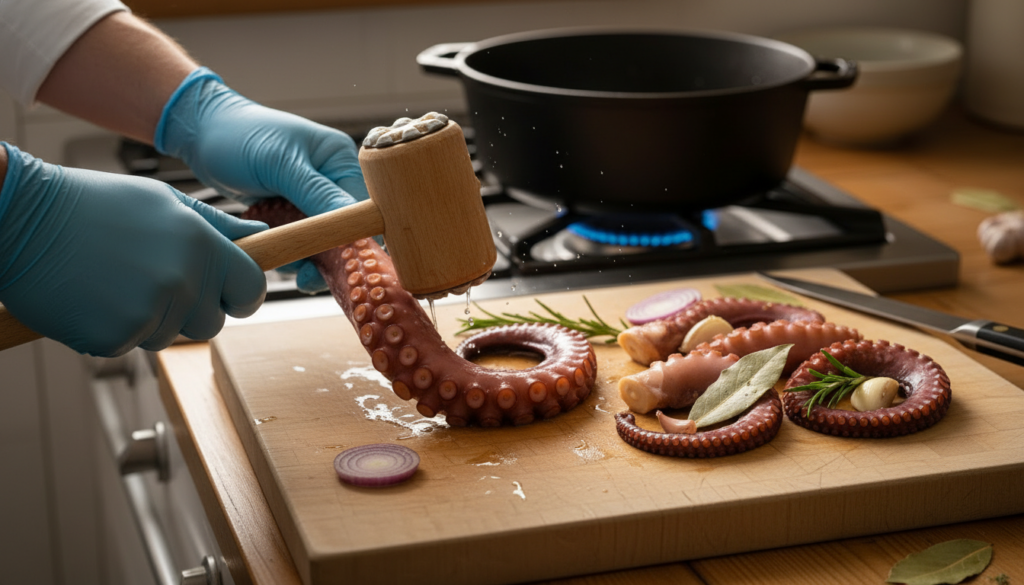
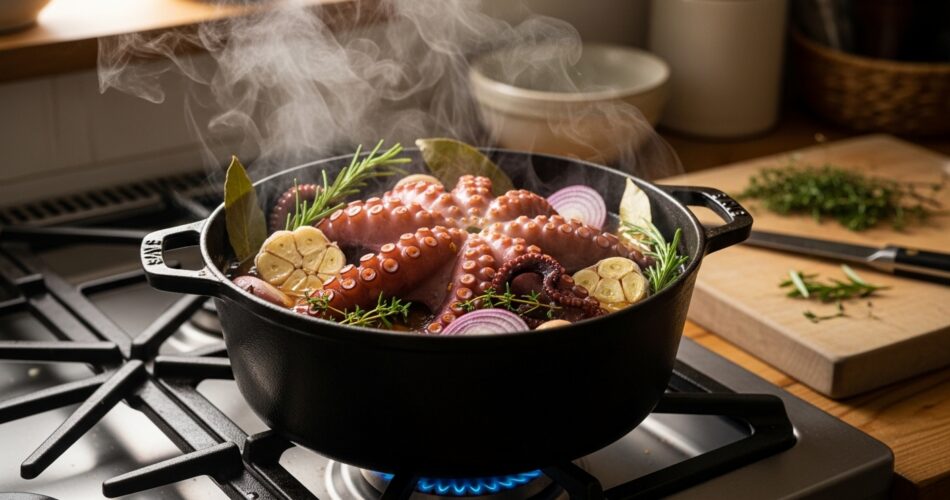
3️⃣ Simmer Slowly (The Secret to Tenderness)
Place the octopus in a large pot with:
- Onion
- Garlic
- Bay leaves
- Peppercorns
Do not add salt at the beginning, as it can toughen the meat.
Add water just to cover the octopus and bring to a gentle simmer.
⏱ Cook for 45–60 minutes on low heat.
👉 The octopus is ready when a knife slides easily into the thickest part.
4️⃣ Let It Rest in Its Own Liquid
Turn off the heat and let the octopus sit in the cooking liquid for 15–20 minutes.
This step helps:
- Keep the meat juicy
- Enhance flavor
- Prevent drying
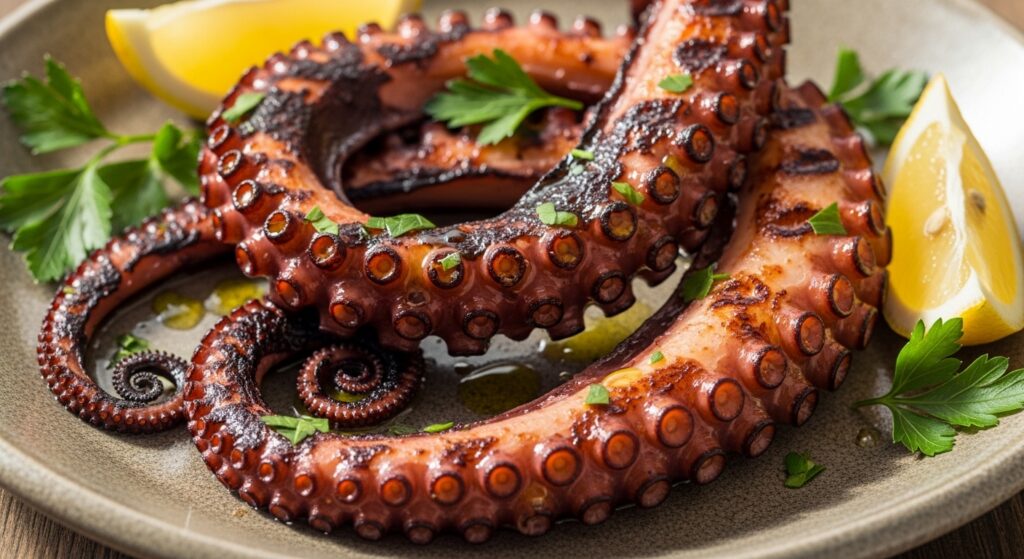
5️⃣ Finish for Flavor (Grill or Sear)
After simmering, you can serve the octopus as is — or take it to the next level:
🔥 Option A: Grilled Octopus
- Brush with olive oil
- Grill on high heat for 3–5 minutes
- Get crispy edges and smoky flavor
🍳 Option B: Pan-Seared Octopus
- Heat olive oil in a pan
- Sear tentacles until golden
This creates the perfect contrast:
crispy outside + tender inside
🍽 Serving Ideas
Serve your perfectly cooked octopus with:
- Lemon wedges
- Olive oil drizzle
- Fresh herbs (parsley or oregano)
- Mediterranean salad
- Garlic potatoes
⭐ Pro Tips for Perfect Octopus
✔ Always cook slowly — never rush
✔ Avoid boiling aggressively (keep it gentle)
✔ Don’t overcook after it becomes tender
✔ Use a fork or knife to test doneness
✔ Finish with high heat for texture
❌ Common Mistakes to Avoid
🚫 Cooking too fast → results in tough meat
🚫 Skipping tenderizing step
🚫 Adding salt too early
🚫 Overcooking after tender stage
🥗 Health Benefits of Octopus
Octopus is not just delicious — it’s also very healthy:
- High in lean protein
- Rich in vitamin B12
- Contains iron and selenium
- Low in fat
It’s a great choice for a high-protein, low-calorie seafood meal.
🌍 A Dish Loved Around the World
Octopus is popular in many cuisines:
- Mediterranean (grilled octopus with olive oil)
- Asian (stir-fried or braised)
- Latin cuisine (ceviche or grilled dishes)
Each culture uses different techniques, but they all follow the same rule:
👉 cook it low and slow for perfect tenderness