🥗 Asian Sesame Seared Tuna Salad
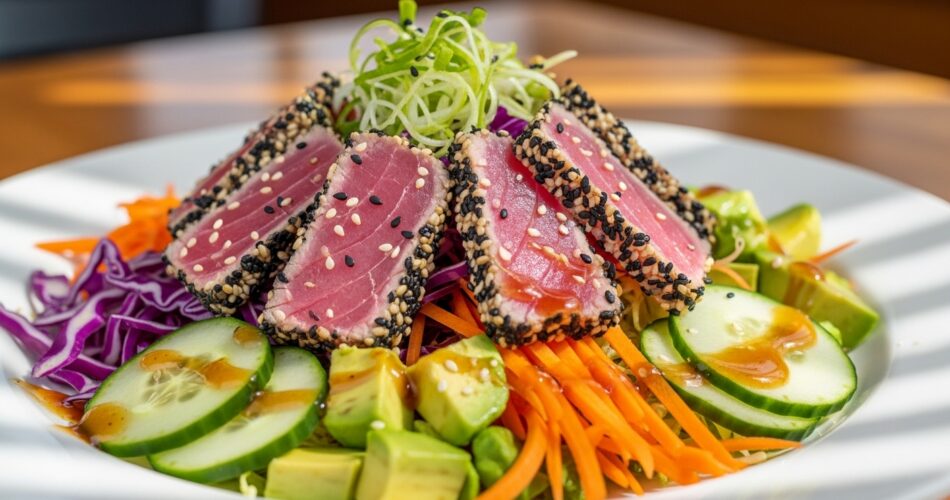
Asian Sesame Seared Tuna Salad is a fresh, high-protein seafood dish featuring lightly seared tuna coated in sesame seeds and served over crisp vegetables with a soy-ginger or sesame dressing. The tuna is usually seared quickly so the inside stays tender and slightly rare while the outside forms a flavorful crust.
⭐ Why This Recipe Is Great
🐟 Rich Flavor with Simple Ingredients
Sesame seeds create a nutty crust on the tuna, while soy sauce, ginger, and lime add bold Asian-style flavors.
🥗 Fresh and Light
The salad typically includes lettuce, cabbage, cucumber, avocado, or radishes, giving the dish a refreshing crunch and balanced taste.
⏱ Quick to Prepare
Seared tuna cooks extremely fast — often 30 seconds to 2 minutes per side — making this a perfect 20-minute meal.
💪 Healthy and High-Protein
Tuna is a lean seafood rich in protein and omega-3 fatty acids, while vegetables provide fiber and vitamins.
🛒 Ingredients
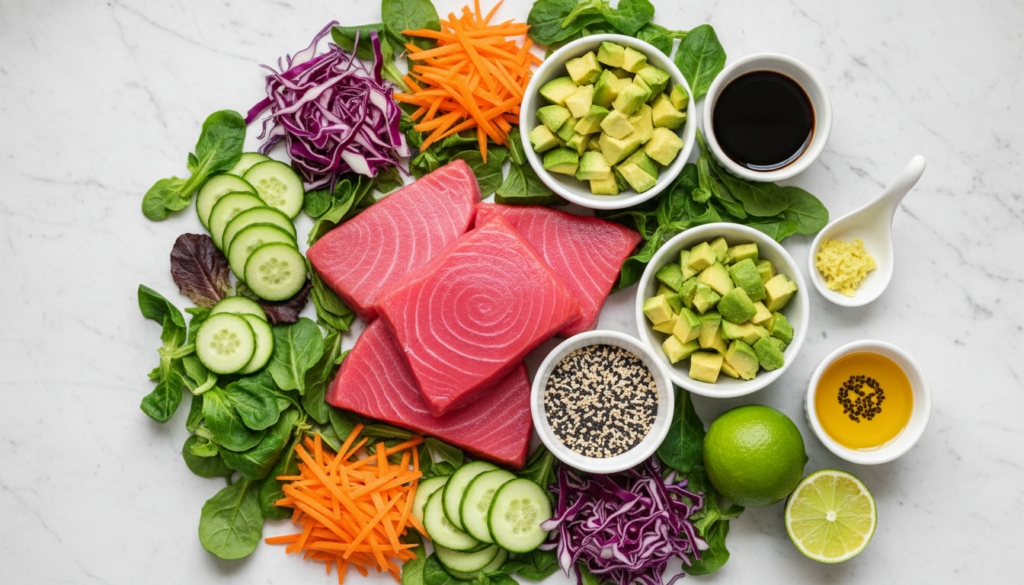
For the Tuna
- 2 sushi-grade tuna steaks
- 3 tbsp sesame seeds (white or black)
- 1 tbsp sesame oil
- Salt and black pepper
For the Salad
- 2 cups mixed greens or lettuce
- 1 cup shredded cabbage
- 1 cucumber (thinly sliced)
- ½ avocado (sliced)
- 1 carrot (julienned)
- 2 green onions (sliced)
For the Sesame Dressing
- 2 tbsp soy sauce
- 1 tbsp rice vinegar
- 1 tbsp sesame oil
- 1 tsp honey
- 1 tsp grated ginger
Asian-style tuna salads often combine fresh greens with soy-ginger dressing and sesame-coated tuna for a balanced dish.
👨🍳 How to Make Asian Sesame Seared Tuna Salad
1️⃣ Coat the Tuna
Season tuna with salt and pepper, then coat all sides with sesame seeds.
2️⃣ Sear the Tuna
Heat sesame oil in a hot skillet.
Sear the tuna for about 1 minute per side so the outside is cooked but the center stays rare.
3️⃣ Prepare the Salad
In a bowl combine:
- lettuce
- cabbage
- cucumber
- carrot
- avocado
- green onions
4️⃣ Make the Dressing
Whisk together soy sauce, rice vinegar, sesame oil, honey, and ginger.
5️⃣ Assemble the Dish
Slice the seared tuna into thin strips and place on top of the salad.
Drizzle with sesame dressing and garnish with extra sesame seeds.
🥑 Why This Recipe Is Healthy
- Lean protein from tuna helps support muscle health.
- Omega-3 fatty acids support heart health.
- Fresh vegetables add fiber, vitamins, and antioxidants.
- Light sesame dressing keeps the dish flavorful but not heavy.
📜 History & Origins of Asian Sesame Seared Tuna Salad
Asian Sesame Seared Tuna Salad is a modern fusion dish that combines traditional Japanese fish-searing techniques with contemporary Asian-inspired salad ingredients and dressings.
🇯🇵 Japanese Tataki Technique
The cooking method used for the tuna comes from Japanese cuisine, particularly a technique called tataki. In tataki, fish or meat is quickly seared over very high heat, leaving the outside lightly cooked while the inside remains rare and tender. This method highlights the natural flavor and texture of high-quality fish such as tuna.
Tataki originally developed as a practical way to preserve and flavor fish while maintaining its delicate taste.
🌱 Role of Sesame in Asian Cooking
Sesame seeds have been cultivated in Asia for thousands of years and are widely used in Japanese, Chinese, and Korean cuisines. They are often toasted to enhance their nutty aroma and crunchy texture, making them a perfect coating for seared tuna.
The sesame crust in this recipe adds both flavor and visual contrast to the tender tuna.
🥗 Evolution into a Modern Salad Dish
The salad version of sesame-crusted tuna became popular in modern restaurants, especially in Asian-fusion cuisine. Chefs began pairing seared tuna with fresh vegetables and sesame-based dressings to create a lighter meal that blends:
- Japanese cooking techniques
- Asian sesame and soy flavors
- Western salad presentation
This fusion approach helped the dish become common on restaurant menus worldwide.
🌎 Today’s Popular Version
Today, Asian Sesame Seared Tuna Salad typically includes:
- sesame-crusted seared tuna
- fresh greens or cabbage
- cucumber, avocado, or carrots
- sesame-ginger or soy dressing
The result is a light, protein-rich seafood salad that combines traditional Asian flavors with modern healthy dining trends.